
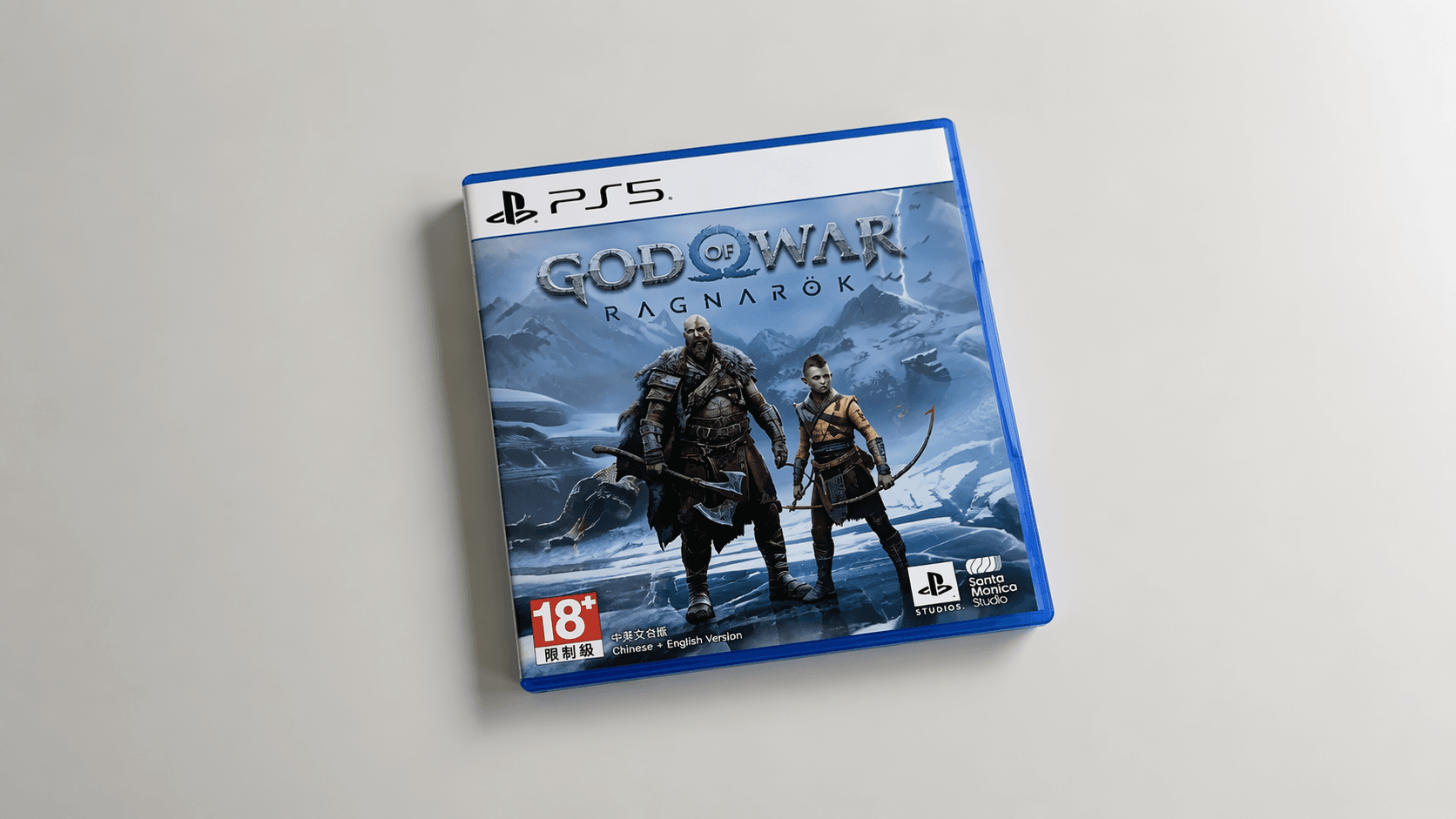
Sony’s decision to stop producing physical discs for new PlayStation games beginning in 2028 has sparked widespread criticism from players, retailers, and preservation advocates. While petitions and social media campaigns continue to call for the company to reverse course, newly highlighted U.S. sales data suggests why analysts believe the move is unlikely to change.
The company announced on July 1 that all new PlayStation titles released from January 2028 onward will be available only as digital purchases through the PlayStation Store and participating retailers. Sony said the change reflects long-term shifts in consumer behavior, adding that digital purchases have become the preferred way for most players to access games. Titles released before the 2028 transition will continue to be available on disc.
Industry analysts argue the sales figures largely support Sony's strategy. Circana's Executive Director and video game industry advisor Mat Piscatella said that only seven PlayStation games have sold more than 100,000 physical copies in the U.S. so far this year. During the week ending July 11, just two PlayStation titles surpassed 10,000 physical units sold. While the figures cover only the U.S. market, they illustrate how digital purchases now account for the overwhelming majority of PlayStation software sales.
The announcement has nevertheless fueled concerns over game ownership, preservation, and consumer choice. Online petitions opposing the decision have attracted significant attention, while PlayStation's social media channels have been flooded with criticism from players worried about losing the option to buy physical games.
Retail groups have also pushed back. The UK's Entertainment Retailers Association (ERA) argued that ending physical releases limits consumer choice despite continued demand for boxed games. According to ERA CEO Kim Bayley, the organization's research shows that 25% of gamers under the age of 25 still use physical discs, while the UK's disc-based games market generated more than £300 million in 2025. Bayley said physical copies continue to offer benefits such as ownership, resale, collecting, gifting, and long-term preservation that digital licenses cannot fully replicate.
Despite the backlash, analysts see little chance of Sony reversing its decision. Kantan Games CEO Dr. Serkan Toto said the company likely anticipated the negative reaction before making the announcement. He argued that even if hundreds of thousands of PlayStation Plus subscribers canceled their memberships in protest, the impact would represent only a small fraction of Sony's user base and would be unlikely to alter the company's long-term strategy.
Financial incentives remain one of the strongest arguments behind the transition. Physical releases require manufacturing, packaging, shipping, and retailer margins, reducing Sony's share of each sale. By comparison, first-party games sold through the PlayStation Store allow Sony to retain the full retail revenue, while third-party digital sales generate the platform's standard revenue share. As console hardware growth slows and production costs rise, digital distribution offers substantially higher profit margins.
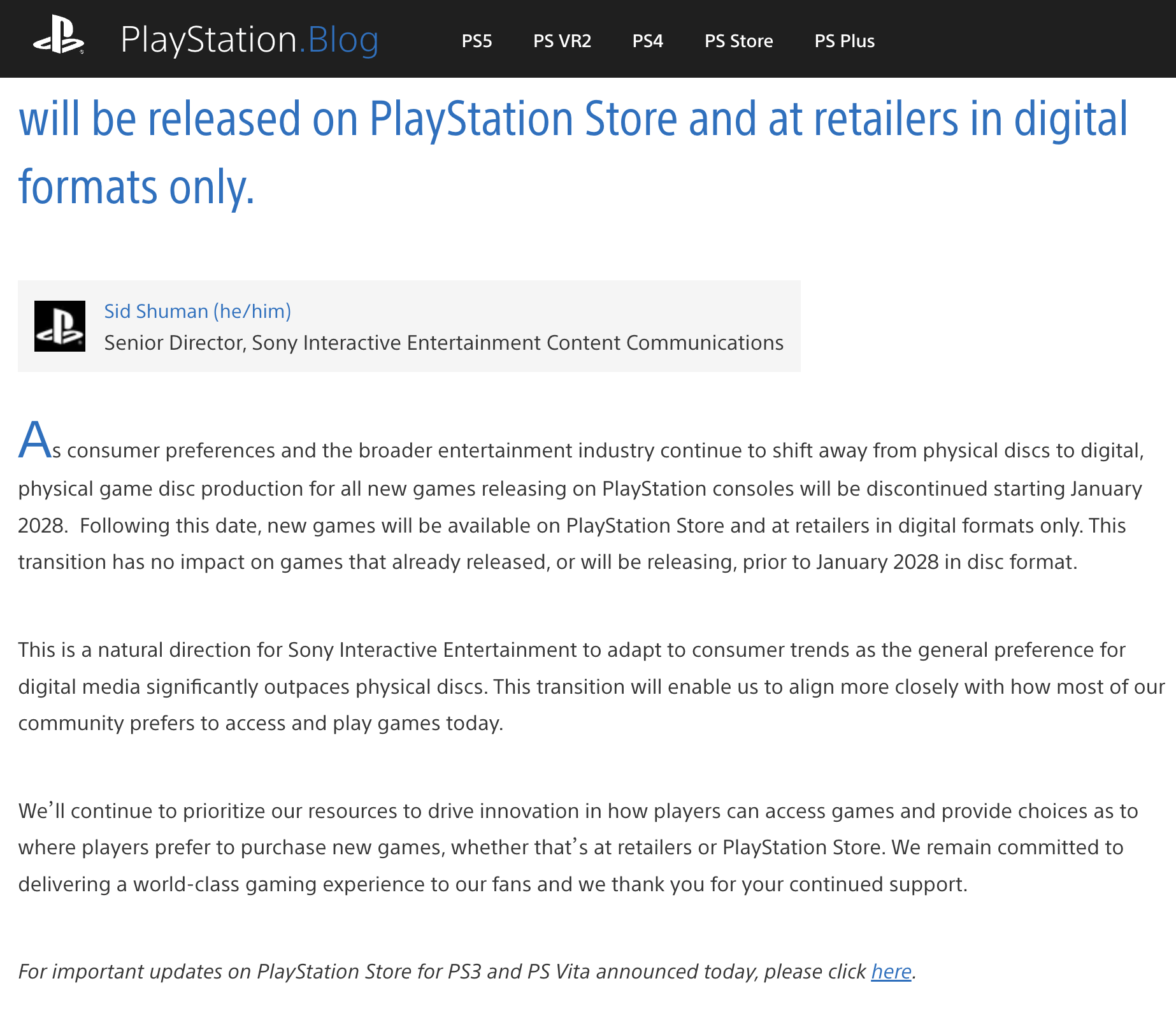
image source: PlayStation.Blog
Ampere Analysis data also points to a broader market transformation. According to games industry analyst Piers Harding-Rolls, digital purchases represented just 13% of full-game sales on PlayStation platforms when the PS4 launched in 2013. By 2025, that figure had climbed to nearly 80%, reflecting a dramatic shift in buying habits over the past two console generations.
Some analysts argue the decline of physical media ultimately reflects consumer behavior rather than corporate preference. Bernstein analyst Robin Zhu said strong digital adoption gave Sony the commercial justification to eliminate discs, noting that physical games carry additional production, shipping, and retail costs that digital sales largely avoid.
Regulatory intervention also appears unlikely. The European Union recently indicated it has no legal basis to prevent Sony—or other platform holders—from discontinuing physical media, leaving the company's digital-only roadmap largely in its own hands.
While opposition from collectors, retailers, and preservation advocates continues, current market trends suggest Sony views the transition as a long-term business decision supported by changing purchasing habits rather than a policy likely to be reversed.