
Silent Hill’s return has felt more meaningful lately because it is no longer tied to just one creative voice. Konami’s willingness to open the door to outside studios has given the series fresh energy, and Silent Hill: Townfall seems positioned as another important piece of that revival. Based on IGN’s preview, this is not a loud or action-heavy reinvention, but a more deliberate kind of horror: a first-person thriller that leans into unease, isolation, and the slow burn tension the series is known for.
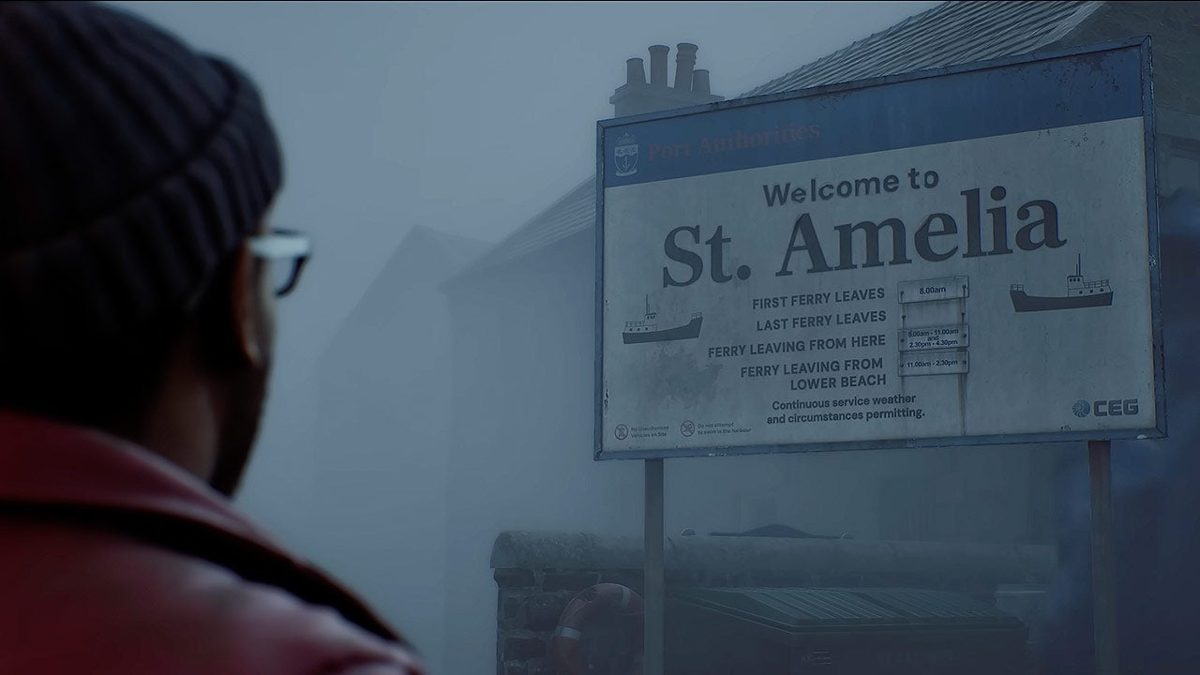
Rather than dropping players into familiar ground, Townfall heads to St. Amelia, a Scottish port town wrapped in fog and decay. That setting matters. Developer Screen Burn, formerly known as No Code, is drawing from its own home country while carrying forward some of the eerie design instincts seen in Observation. The result appears to be a place with strong identity from the start, one that feels grounded enough to be believable while still strange enough to be deeply unsettling.
The game reportedly begins with very little explanation, letting confusion become part of the experience. Players step into the role of Simon Ordell, who finds himself in the cobbled streets of St. Amelia with more questions than answers. That fragmented introduction sounds especially fitting for Silent Hill, where fear often comes not just from monsters, but from uncertainty—about where you are, what happened here, and what your own connection to it might be.
A Horror Game That Wants You to Slow Down
One of the most striking details from IGN’s look at Townfall is its approach to survival. Combat exists, but it does not sound empowering. Encounters with the town’s disturbed, grotesquely altered inhabitants are framed as dangerous, and fighting is treated as an option of desperation rather than dominance. Simon apparently has access to only a few melee weapons, including a wooden plank wrapped in barbed wire, which immediately suggests improvised survival instead of traditional action-horror confidence.
That design naturally pushes the game toward stealth. Instead of rushing through spaces or clearing threats head-on, players are encouraged to move carefully, read situations, and avoid unnecessary risk. It is an approach that fits both the Silent Hill tone and the influence of Townfall director Jon McKellan, whose past work on Alien Isolation seems to echo here in the game’s tension-first philosophy.
The CRTV Might Be Townfall’s Most Interesting Idea
At the center of Townfall’s moment-to-moment gameplay is a device called the CRTV, a handheld radio with a screen that visualizes signals. According to IGN, it serves multiple functions: navigation aid, puzzle-solving tool, and a way to track enemy movement through walls. But what makes it stand out is that it does not seem to work like a simple all-purpose scanner.
Players reportedly need to aim it carefully and study its small display with attention, almost as if interpreting medical imaging. That detail alone changes the feel of using it. Instead of pressing a button for instant clarity, the CRTV demands focus, which means vulnerability. In the demo described by IGN, it could be used to watch patrol routes from around a corner, allowing players to time their movement without stepping directly into danger.
This kind of in-world system sounds like one of Townfall’s smartest ideas. Because the CRTV is integrated into the fiction rather than presented as a detached interface tool, it supports immersion while also reinforcing the game’s 1996 setting. Even progression appears tied to interpretation: tuning signals can reveal static-filled images that hint at where to go next, leaving players to compare those clues with their surroundings and figure out the correct alley, doorway, or building on their own.
Environmental Storytelling Still Seems Key
IGN’s preview suggests that Townfall is holding back many of its biggest horrors for later, but even the small details already point toward a town with a troubled history. Protest signs in the square hint at civic unrest or collapse. An IV in Simon’s arm raises immediate questions about his condition. A nurse named Zoe is also mentioned, potentially tying into the game’s larger mystery.
None of this is laid out cleanly, and that appears to be the point. Like the best Silent Hill stories, Townfall seems interested in implication over explanation. It wants players to observe, connect fragments, and sit with discomfort rather than receive straightforward answers. That restraint may end up being one of its greatest strengths.
Why Townfall Feels Promising
What makes Silent Hill: Townfall especially compelling is not that it is trying to outdo the series with scale or spectacle. It seems more interested in capturing the qualities that made Silent Hill resonate in the first place: oppressive atmosphere, psychological uncertainty, and mechanics that support fear instead of interrupting it. A first-person perspective, limited combat, stealth-driven survival, and a device like the CRTV all point toward a game built around tension rather than release.
If IGN’s early look is any indication, Townfall could become one of the more distinctive entries in Silent Hill’s current resurgence. It is taking a measured approach, but that may be exactly why it stands out.
Silent Hill: Townfall is set to launch on September 24 for PlayStation 5 and PC.
Source: IGN Southeast Asia. Written by Michael Higham.