
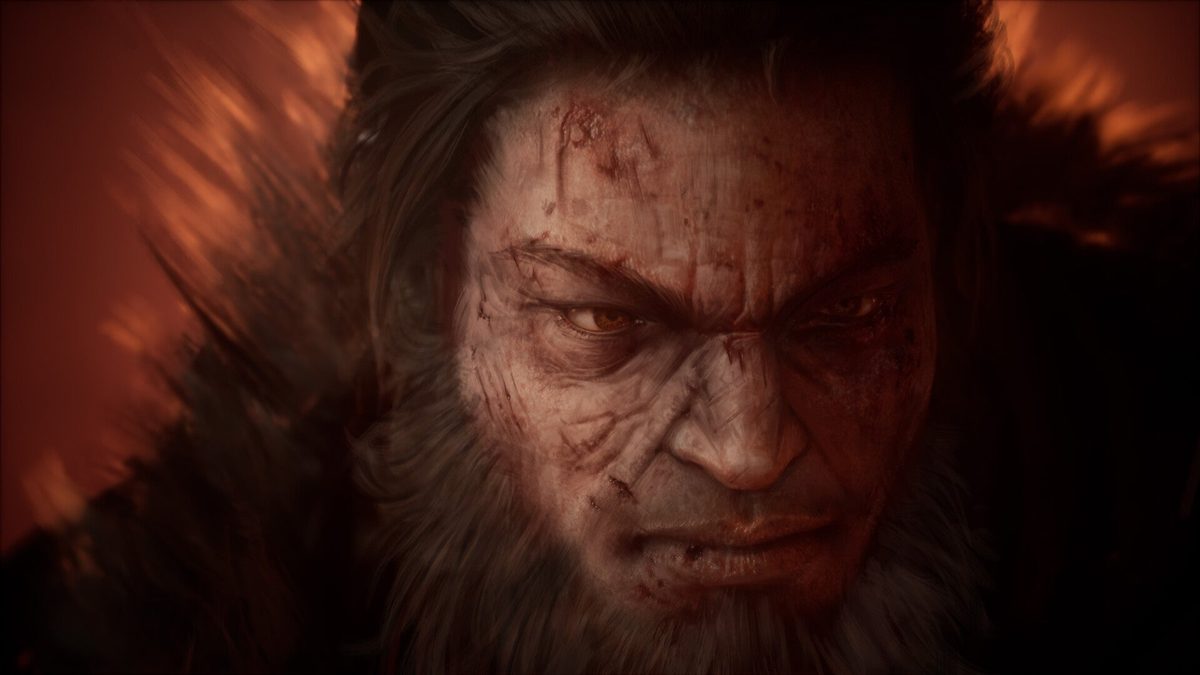
Arsilutus is not simply a fallen kingdom in The Relic: First Guardian; it is a land already slipping into oblivion. With the Great Relic shattered, the world has been swallowed by the Void, leaving behind a brutal landscape where survivors are hunted by both men and monsters. In the role of the First Guardian, your task is clear in concept but grim in execution: recover what was lost, restore the Great Relic, and try to pull this cursed world back from collapse.
A ruined world told through its dead
Rather than opening with grand speeches or a flood of lore, the game appears to introduce its tone through smaller tragedies. After a short cave tutorial, the journey begins at a house already on fire. A woman cries out from inside, but even after forcing your way through the barricaded entrance, you arrive too late to save her. What remains are notes and relics scattered nearby, each one adding another piece to the story of a family that refused entry to attackers and paid for it with their home.
That approach seems central to The Relic: First Guardian. Based on IGN’s preview, the game does not rely on long cinematic scenes to carry its narrative. Instead, Arsilutus is built out of smaller, self-contained stories embedded in its locations. One place may reveal the aftermath of a father’s revenge, another the fate of people who hesitated too long before fleeing danger. The result sounds less like one uninterrupted plotline and more like a collection of grim legends spread across the world.
Those fragments are also fully voiced, which gives them a stronger presence than simple item descriptions or text logs. IGN describes them as brief, focused snapshots rather than dense lore dumps, with several drawing inspiration from Asian folklore. That framing could give the world a distinct identity, especially for players who enjoy discovering a setting by listening, observing, and piecing events together on their own.
Exploration without a guiding hand
The world structure is described as semi-open. You are free to roam, but not in the sense of an endlessly sprawling map. Areas are more contained, often framed by steep cliffs and arranged in a generally forward-and-back flow with branching paths. There is no obvious trail pushing the player from objective to objective, which makes curiosity an important part of progression.
To support that exploration, players can find glowing yellow rune-marked stones that grant Tibelle’s Blessing. These function much like bonfires or Sites of Grace in other Soulslikes: they restore health, refill the Breath of Esser healing resource, serve as respawn points, and in some cases also work as fast-travel locations.
Soulslike combat with a few key twists
On the combat side, The Relic: First Guardian appears familiar enough to immediately register with Soulslike players. You will fight human enemies such as bandits as well as corrupted creatures known as Brutals. In the preview build, the playable setup centered on a sword and shield, with the expected toolkit of attacks, blocks, parries, and dodges.
Where it starts to separate itself is in how offense is structured. There is no standard heavy attack mapped in the usual way. That input is instead used for magic, including spells like a fireball that can inflict burning. Magic also does not consume mana. It runs on cooldowns, meaning players can continue using it regularly without worrying about emptying a resource pool before a major encounter.
Another notable change is stamina. While the game does have a stamina meter, attacking does not drain it. That shifts the flow of battle in a meaningful way, because aggression is less about rationing swings and more about managing defense, positioning, and timing. It sounds like a system that encourages pressure, while still demanding discipline.
IGN compares the overall feel more closely to Dark Souls or Demon’s Souls than to faster modern action games. The emphasis is on commitment. Actions carry weight, and poor timing can leave you exposed. That can make combat feel somewhat clunky at times according to the preview, but the tradeoff is a stronger focus on making the right decision rather than simply reacting faster.
Boss fights as the heart of the experience
If the preview is any indication, the game’s biggest draw may be its bosses. IGN reports that The Relic: First Guardian features more than 70 of them, and they are framed less as simple stat checks and more as individual combat problems to solve.
Branko, the Bloodstained Shield, for example, is encountered in a burning chapel and fights with an axe and shield. Simply blocking his pressure is costly, but parrying conserves stamina while also wearing down his own, eventually opening him up once his stance is broken. The lesson is not just to survive, but to understand what the fight is asking of you.
Entom the Starved demands a different answer. This boss uses unblockable charges and crashing leaps, pushing the player toward evasion instead of defensive play. The rhythm becomes one of dodging, landing quick damage, and backing off until the next safe opportunity appears. In that sense, each boss seems designed around a distinct style of read-and-respond combat.
The variety in these encounters extends beyond mechanics. IGN highlights bosses such as Branko, Entom, and the knight Mog as examples of different visual and narrative identities. Branko is imposing and warlike, Entom is defined by grotesque hunger, and Mog brings a more refined sword-fighting style. Their stories are also tied into the world through relics found along the way. Mog was once meant to stand against the Brutal but abandoned his allies and fled. Entom’s story involves illness, an old man’s cure, and a descent into endless appetite. That combination of lore and mechanical identity could make each major encounter feel more memorable than a standard boss roster.
Progression built around gear, not leveling
One of the more unusual choices in The Relic: First Guardian is how it handles character growth. There is no straightforward level-up path and no familiar recovery loop where lost souls or currency must be reclaimed after death. Instead, progression is driven mostly by equipment.
Bosses can reward Relics, and while only a limited number can be equipped early on, additional slots become available over time. These Relics provide bonuses that can significantly shape survivability and playstyle. One example mentioned in the preview is Memory of the Meal Left Behind, earned from Entom, which restores health when enemies are defeated.
Armor handles defensive value, while individual pieces can also provide additional effects. IGN points to the Shroud of Cowardly Survival, obtained from Mog, as an item that improves stamina and cooldown speed. The overall system sounds less about pumping attributes and more about assembling a build from the relics and equipment you have earned.
Weapons still matter in a big way
Weapons are the main area where a more conventional upgrade path appears. The preview references several weapon options, including Two-Handed Weapon, Battle Staff, Dagger, and Long Sword, in addition to the sword-and-shield setup shown in the demo.
Both weapons and magic use upgrade trees tied to Ancient Relic Energy found during exploration. These upgrades can unlock buffs as well as new attacks. One example is the Focus strike, which sends the character upward with an uppercut slash before following with a diving cleave. Weapons are described as one-of-a-kind, and they can be improved at a blacksmith using coins and materials.
A strong early impression
IGN’s overall takeaway was positive, and it is easy to see why. Between the relic-based survivability, improving parry rhythm, and the steady discovery of fully voiced story fragments, The Relic: First Guardian seems to be aiming for more than just another dark fantasy boss rush. It wants exploration to matter, it wants every region to carry a story, and it wants each boss to feel like a distinct trial rather than another oversized enemy with a health bar.
For players who enjoy Soulslikes with a heavier focus on atmosphere, methodical combat, and worldbuilding delivered through scattered discovery, this one looks worth watching.
The Relic: First Guardian releases on July 31 for PC and PS5.
Source: IGN Preview by Justin Koreis.