
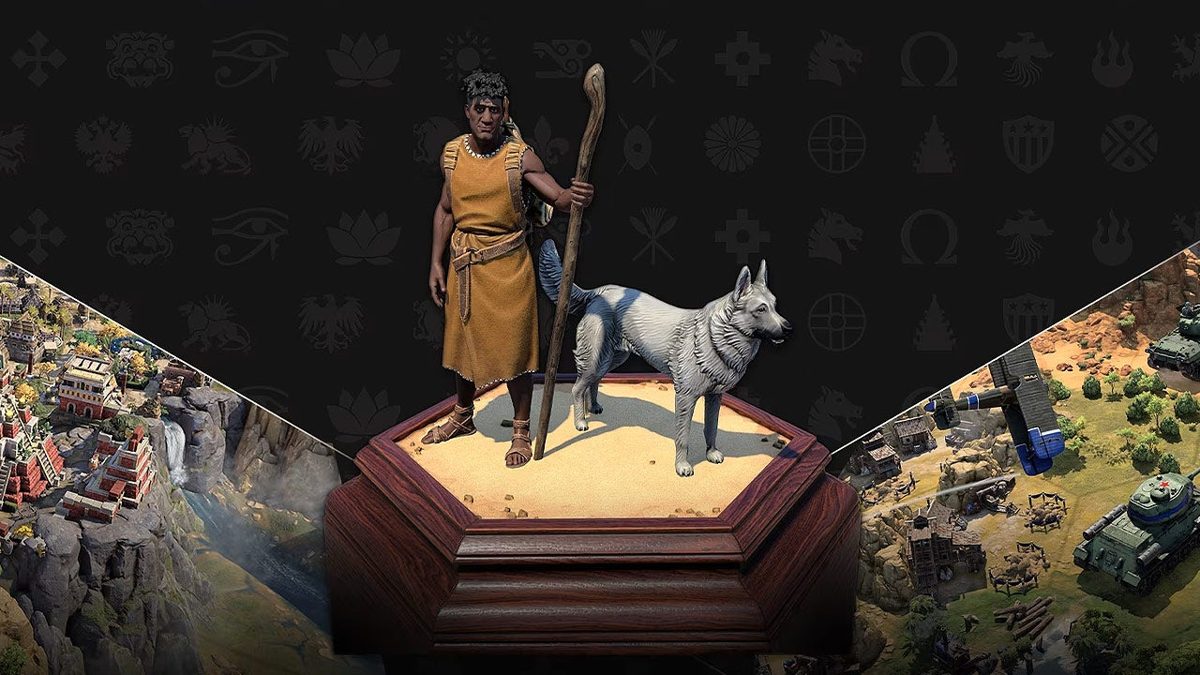
IGN Southeast Asia has returned to Civilization 7 after a lengthy break, revisiting Firaxis’ latest 4X with the substantial 1.4 Test of Time update and, more specifically, the 1.4.1 patch released in late June 2026. The verdict from this follow-up is clear: the game is meaningfully better in several practical ways, especially where usability is concerned, but the larger design shift behind those changes is more debatable.
Part of that discussion is framed by comments from Take-Two CEO Strauss Zelnick, who told Game File in May that Civilization 7 may have been a “bridge too far” for longtime fans. IGN’s update suggests that idea now feels central to the way Firaxis is steering the game post-launch. The concern, however, is that the studio may be reacting more to player-proposed fixes than to the deeper issues players were actually trying to point out.
Where the original review still stands
With Civilization 7, the desire to streamline and simplify this legendary 4X series feels like it has gone a bit too far, particularly when it comes to the interface. It’s frustratingly inadequate at providing me with the information I need to play well, or even understand what's going on sometimes. Even so, it does have improved warfare and diplomacy, a bit of added narrative flair, as well as mostly gorgeous graphics and sound, so it can still give me reasons to keep clicking one more turn late into the night. There’s good reason to believe that with Firaxis’s usual pace of patches and expansions it can refine its new ideas and become everything it ought to be, and while what’s here right now is at least still a fun time, it’s also a bigger step backward for the series than we’re accustomed to when a new age dawns.
Leana Hafer, February 3, 2025
Score: 7
Read the full Civilization 7 review.
That earlier perspective has not been entirely overturned. The update makes it sound like Civilization 7 remains compelling in the familiar series way, still capable of pulling players into that dangerous “one more turn” loop. At the same time, the game’s current form still does not fully convince as the best version of Firaxis’ long-running strategy formula.
The ideas that still work
One of the more interesting points in the updated review is that some of Civilization 7’s boldest concepts are still among its strongest. The reviewer remains positive on civ switching, even though it has been one of the game’s more divisive systems. Being able to change civilizations from age to age continues to stand out as a fresh approach, and players can choose whether the AI follows that same model.
The newly supported concept of “timeless” civilizations also gets a favorable mention. For players who prefer continuity, the option to stick with the same civ across all three ages appears to add welcome flexibility. On top of that, unique policy cards that remain accessible outside a civilization’s native apex age are seen as another smart touch.
Among these systems, Syncretism is highlighted especially positively. It lets players draw on unique units or improvements from a civilization they know that is currently in its apex age, adding a layer of adaptation and cross-cultural borrowing that feels distinct from the series’ older design habits.
Victory conditions have become the biggest sticking point
The sharpest criticism in the update is aimed squarely at how winning works now. According to IGN, the major victory routes have been flattened into simplified point races, leaving behind only traces of the more age-driven objectives found in version 1.0. Those older goals may have been messy, but the replacement system is described as cleaner in a way that also makes it less engaging.
There are still four main paths to pursue:
- Tourism for culture
- Domination for military
- GDP for economy
- Innovation for science
But the review argues that these routes now feel too similar in practice. Tourism, for example, returns in name, but not in the more distinctive form players may remember from Civ 6. Here, it is essentially just the label for cultural victory points, and it apparently does little to challenge the game’s wonder-focused meta.
GDP absorbs several mechanics that previously had more specific identities. Systems from 1.0 such as factories and treasure fleets now feed into economic scoring, alongside city gold output and trade routes. Domination mostly comes down to controlling conquered cities, while Innovation is tied to special projects and progress through the tech tree. Science at least gets one notable wrinkle: players must build and defend a launch pad, which the update calls out as one of the few more interesting twists left in the system.
The broader structure is straightforward. To trigger victory, a player must push one of those category scores to a defined threshold above the second-place civilization. Once that margin is reached, a five-turn countdown begins. The threshold itself also shrinks as the game progresses, reportedly dropping from 5x in Antiquity to as low as 1.5x around 60% of the way through the Modern Age.
That scaling can help finish off matches that already feel decided. But IGN’s take is that it also hints at a larger unresolved problem: the late game still may not be fun enough to sustain full-length play without these accelerating end conditions.
The update also disputes Firaxis’ suggestion in the 1.4 patch notes that letting players commit to a single victory track from the start is a major improvement. One of the more intriguing aspects of the original structure, the reviewer argues, was the freedom to pivot strategies between ages. In the current setup, there seems to be little incentive to do that anymore.
Interface fixes finally matter
If the victory redesign is the update’s biggest disappointment, the interface overhaul sounds like its most meaningful success. Quality-of-life improvements are described as substantial, and that matters in a game where understanding information quickly is half the battle.
Tooltips now provide more detail and easier access to key information, and they can finally be pinned. The review does note that the default keybind for this feature is a strange one, but the option itself is still a welcome addition. More broadly, the UI seems far better at surfacing the data players need in the moment instead of forcing them to guess or dig around blindly.
The Civlopedia is still not where many players would want it to be. IGN notes that it remains missing conveniences such as clickable hyperlinks to related entries. Even so, it is said to be much more usable than before, both for checking how systems work and for understanding how certain figures are being calculated.
Custom setup is improving too
The update also points to stronger pre-game options. Match setup has been expanded and explained more clearly, even if it still does not reach the depth older Civilization games offered.
Several examples stand out:
- Some map types now include extra variables such as sea level.
- Archipelago maps reportedly look closer to true island chains, though they may still contain too much land even at high sea level.
- Custom difficulty settings let players separate AI economic bonuses from blunt combat advantages.
- Players can decide whether AI leaders stick with their starting civilization or adopt a new one each age.
These are not necessarily flashy additions, but they are exactly the sort of options strategy players tend to appreciate over long-term play. They make the game easier to tailor, and they push Civilization 7 closer to the level of control series veterans expect.
Better, but not yet essential
The overall takeaway from IGN Southeast Asia’s revisit is mixed in a very specific way. Civilization 7 is in a better place after Test of Time, and the improved interface alone sounds like a major relief. There are real gains here, not just patch-note filler. But the game’s broader direction remains uncertain.
Rather than fully building on its bolder new ideas, the update suggests Firaxis has retreated from some of them. As a result, the current version of Civilization 7 is said to feel less like a confident evolution of the series and more like a pared-down Civ 6. That leaves it struggling to stand alongside Civilization 5 or Civilization 6, especially after those earlier games benefited from years of expansions and refinement.
So while the 1.4 Test of Time update and 1.4.1 patch appear to have made Civilization 7 easier to play and easier to appreciate, they have not yet made it the reviewer’s go-to entry in the franchise. IGN’s conclusion is that one or two major expansions may still be needed before the game’s long-term identity becomes clear. For now, the post-launch support has produced improvements worth recognizing, even if the destination Firaxis is heading toward remains open to debate.