
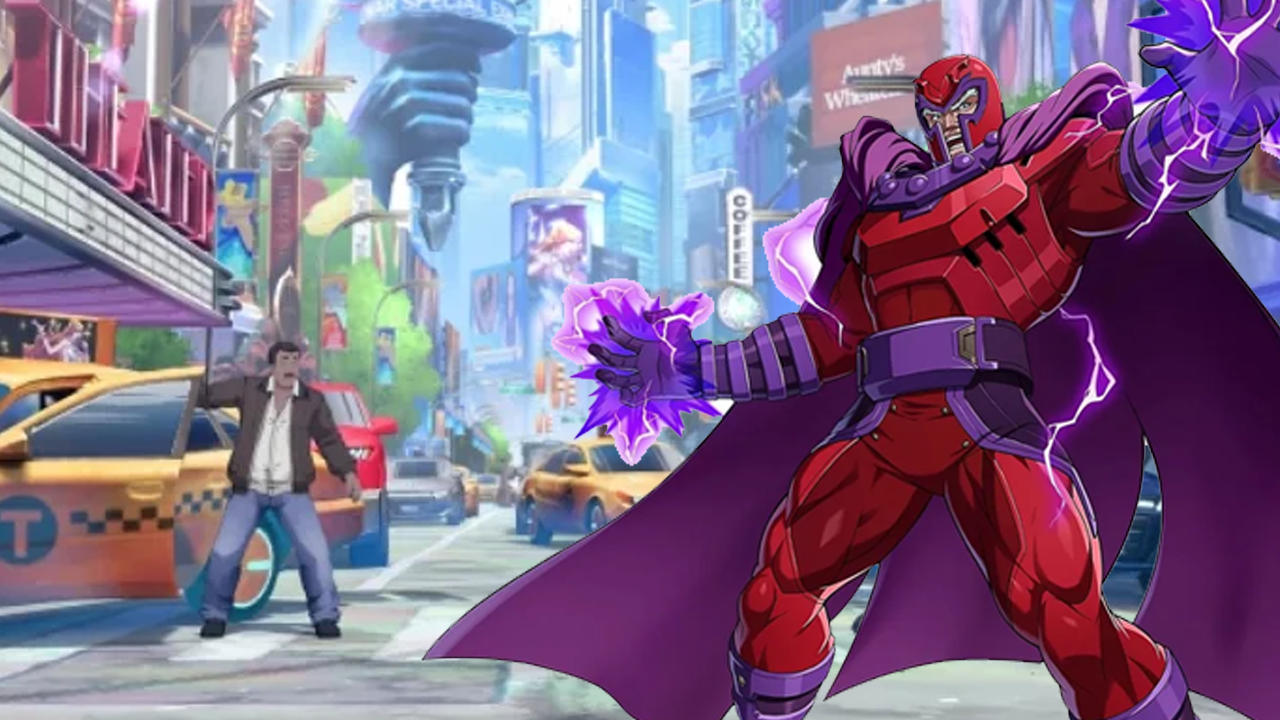
When Marvel Tokon: Fighting Souls first appeared during Sony's State of Play last year, the response was immediate. ArcSystem Works' Marvel fighter quickly became one of the most talked-about reveals in the genre. That momentum cooled a bit after the first beta, where players raised concerns about the tag and assist systems, but later play tests appear to have shifted sentiment back in the game's favor.
Speaking at Evo 2026, Battle Director Kazuto Sekine, Producer Takeshi Yamanaka, and Marvel Games' Michael Francisco shared more about how the team responded to that feedback, how it thinks about adapting Marvel icons into a fighting game, and why Magneto became such a major focus for the latest build.
ArcSystem Works' Take on Marvel's Roster
"We want to create the coolest possible version of these characters that we can make at ArcSystem Works," Sekine said.
That goal seems to sit at the center of Tokon's character design. Sekine explained that the team studies each hero and villain across comics, films, and animated shows, then works backward from that identity into mechanics that feel strong, readable, and fun in a match. Some Marvel characters come with powers or traits that are so essential they leave little room to deviate, while others give the developers more space to reinterpret how they fight.
The result is not meant to be a straight recreation of earlier Marvel fighting games, even if longtime players may spot touches that feel familiar. ArcSystem Works is clearly aiming for its own version of these characters, one shaped by the studio's style and sense of what looks and feels exciting in play.
How the Story and Research Came Together
Yamanaka described the story mode as following a shared setup: a promoter and a champion arrive on Earth, with the champion seeking out powerful fighters. Invitations to battle are sent to both heroes and villains, and the narrative follows the already revealed leader characters, including Captain America and Storm, as they deal with the conflicts that follow.
He also spoke candidly about the team's relationship with Marvel Comics. While ArcSystem Works may not have started with the same baseline familiarity as many Western comic fans, the studio leaned hard into research. Some staff members were already deeply knowledgeable Marvel readers, and that internal interest helped shape the process. The team used Marvel Unlimited, purchased comics directly, and even built up a shelf of reference material in the development space.
That research effort sounds like it became part of the studio's daily workflow. Staff recommended reading tied to specific characters, and in some cases gave presentations so the broader team could better understand who those characters were and what made them distinct.
Francisco said Marvel was impressed by how seriously ArcSystem Works approached understanding the universe. He also noted that the studio consulted Akitomo-san, who had previously worked on official comic translations in Japan, and that actual comic panels were used as reference for attack key frames.
What the Team Will and Won't Say Yet
On feature questions such as in-game character tutorials, combo trials, or replay takeover-style systems, Sekine stayed focused on what players have already been able to try in the hands-on demo. He did, however, point out ArcSystem Works' long history with fighting games and mentioned that he is also a fan of the genre himself, which at least suggests the team is well aware of the features players tend to value.
Yamanaka was similarly careful when the conversation turned to post-launch plans. He did not confirm whether future DLC character reveals would keep the game's team-based trailer format, and he avoided giving a firm number for how long support will last. What he did say is that the team wants to keep meeting player expectations for as long as excitement around the game remains high.
Magneto as a Statement Character
One of the biggest reveals on the Evo show floor was Magneto being playable for the first time, and Sekine admitted there was real pressure in tackling him. That makes sense. Magneto is one of the most recognizable characters in the history of Marvel fighting games, so any new interpretation is going to be judged closely.
"One thing that we really wanted to achieve was to take his magnetic abilities and make that the center of his battle mechanics," Sekine said.
Rather than treating magnetism as a visual flourish, ArcSystem Works built Magneto around it. Sekine said this version can generate debris, shape that debris into weapons, and pull opponents in through magnetic force. He also highlighted a magnetized status effect that Magneto can apply, describing it as a new gameplay angle the team feels players have not really seen before in games.
His move set also appears to tie directly into the environment. Sekine explained that one of Magneto's distinctive attacks sends objects flying through magnetism, and the objects themselves change based on the stage, including areas like New York and Ice Mansion.
Francisco added that Marvel's main request for the character was simple in concept but demanding in execution: Magneto needed to manipulate metal as much as possible. That introduced both design and technical challenges, especially with so many particles and pieces of debris lingering on screen. In practice, though, the result sounds like a Magneto built less as a conventional rushdown threat and more as a force that controls space, throws around girders and cars, and reshapes the battlefield in a way that feels closer to the comics.
Mitchell Saltzman is an editorial producer at IGN. You can find him on Twitter at @JurassicRabbit.